
Why Coating Thickness (22–24 µm) Matters More Than Gloss
When buyers compare whiteboard surface samples, the first thing they see is gloss. It photographs
well, it feels premium, and it is easy to specify. It is also the least reliable predictor of how
a panel performs in a classroom or meeting room. The number that actually predicts lifespan is
dry film thickness — DFT — and here is why.
What the coating is doing
A writing surface is a working tool. Every day it takes marker solvents, dry wiping, spray
cleaners, palm friction and the occasional scrub with the wrong cloth. The coating has to survive
all of that while staying smooth and non-porous. That is a materials job, not a shine contest.
On a properly built panel there are two layers:
- Primer — the bond layer. It anchors the system to the zinc and stops corrosion migrating
under the top coat.
- Top coat — the wear layer. It carries the colour, the gloss level and the erase performance.
Together, on a double-coated panel, they should measure 22–24 µm total. That figure is not
arbitrary: below it, the top coat wears through to primer in high-traffic zones; far above it,
you are paying for coating you will never use and risking brittleness.
What goes wrong when DFT runs thin
Thin coating fails in a predictable sequence:
1. Polishing — high-use areas of the board develop shiny patches where the surface has worn.
2. Ghosting — the worn zones trap pigment and stop erasing clean.
3. Breakthrough — the top coat wears through to primer, and the patch is permanent.
A panel that starts at 15 µm instead of 22 µm might look identical on delivery and fail within a
school year. This is why DFT belongs in the purchase specification, not just in the factory's
internal notes.
How to verify it — on the sample and in production
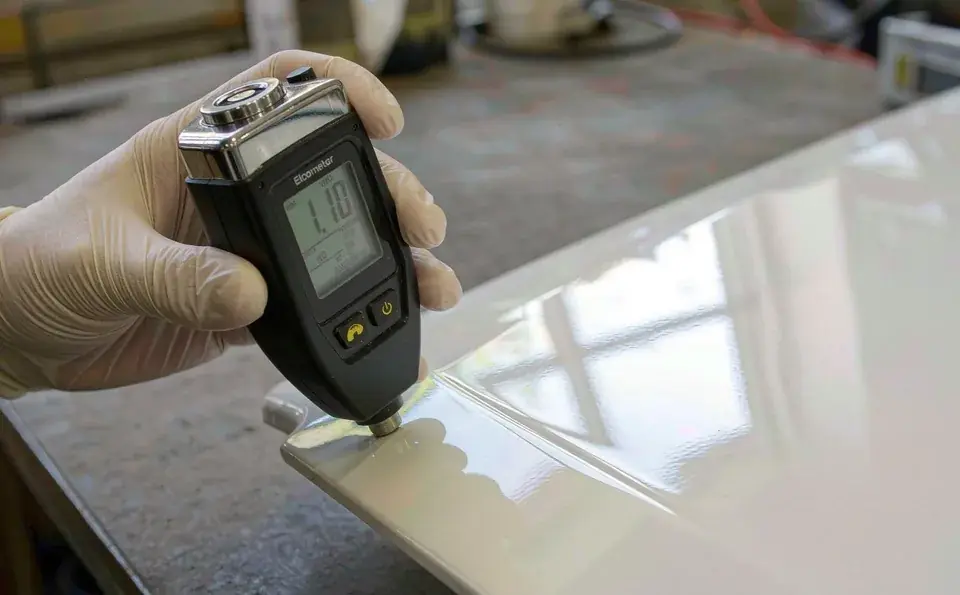
DFT is measured with a coating thickness gauge, a handheld instrument that costs less than a good
calculator. Two habits make it meaningful:
- Measure samples before ordering — five points across the panel, average the readings.
- Require MTC data per coil — the mill test certificate should state the measured coating
weight, so what you ordered is what arrives.
Reputable coating lines measure in-line continuously, not just on request. Ask the question: is
DFT measured during production or only claimed on the datasheet? The difference is the
difference between a spec and a hope.
Where gloss does matter
To be fair to gloss: it has a real job. Gloss level affects marker visibility, glare under
lighting, and the look of the finished board — which is why the standard builds differ by
surface type:
- Whiteboard surfaces — 88–95 GU. A hard, bright gloss lets dry-erase markers wipe off
cleanly and keeps ghosting down over years of daily use.
- Green & black chalkboards — 10–16 GU. Deep matte gives chalk the tooth it needs and
kills glare under classroom and shop lighting.
- Custom gloss on request — retail, display or signage projects sometimes want something
in between; we can match an agreed standard per batch.
Choose gloss for the room. Specify DFT for the lifespan.
The one-line version
Gloss is a preference; DFT is a guarantee. Put 22–24 µm total dry film, measured per batch in
your purchase spec, and the panel will outlast the furniture it is framed into.
Want to check our numbers against yours? Order a free A4 sample and bring your
own gauge.